
Research
Where Research Strengthens Connection and Care
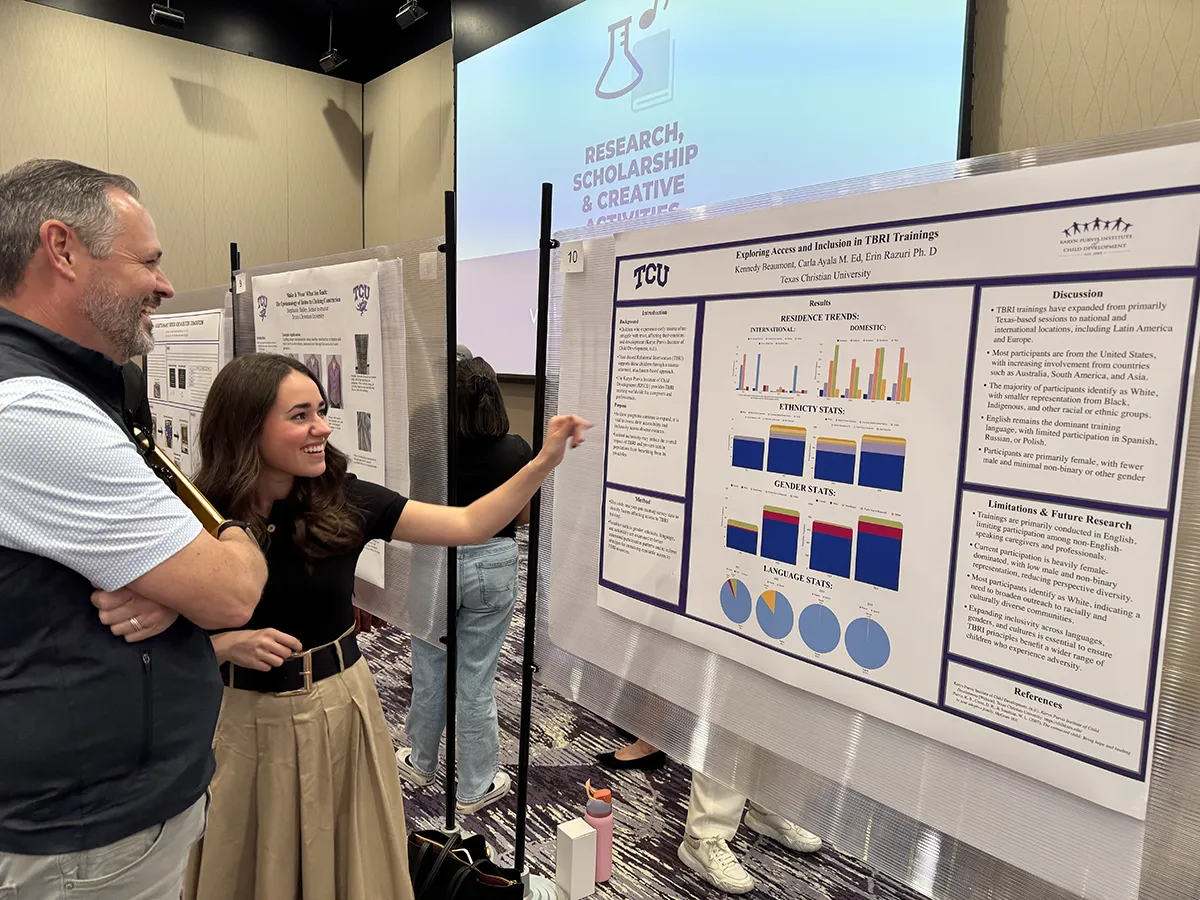
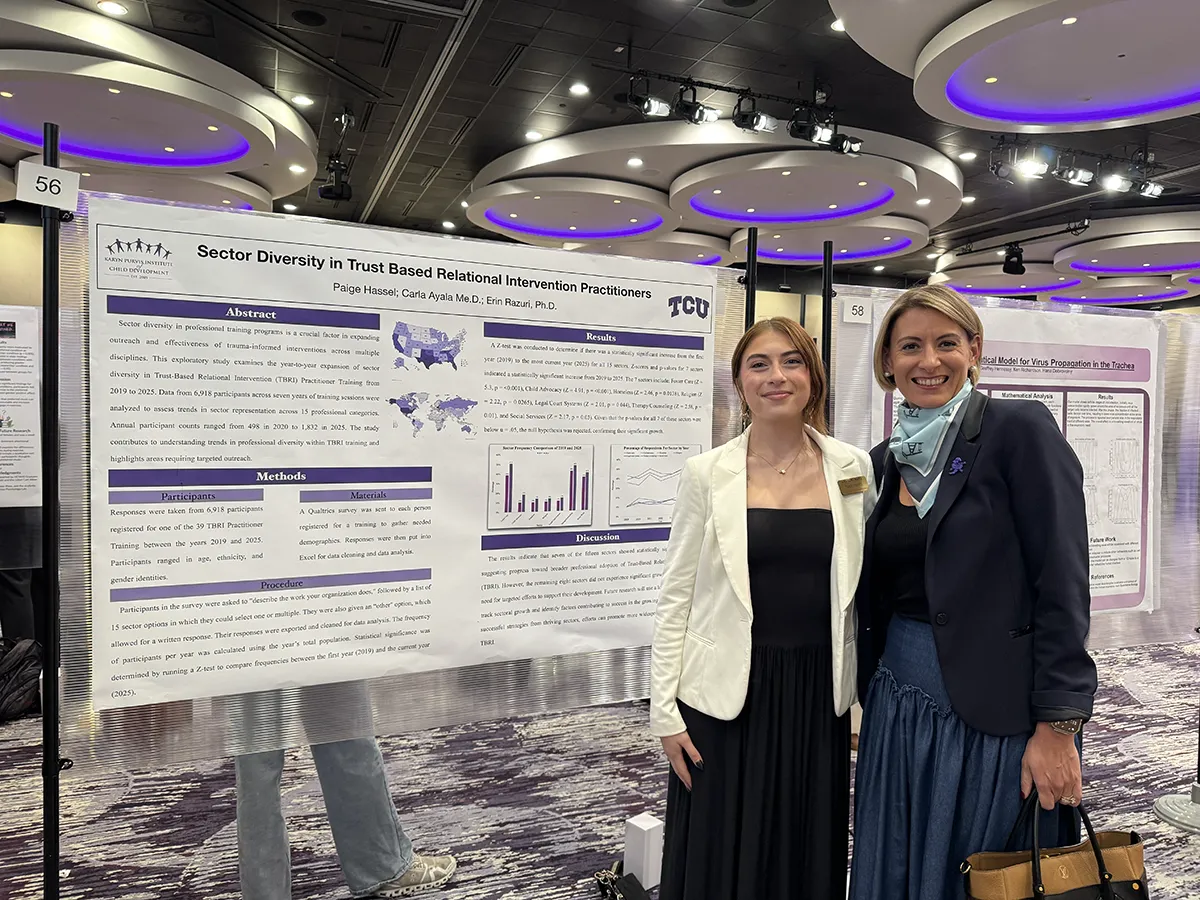
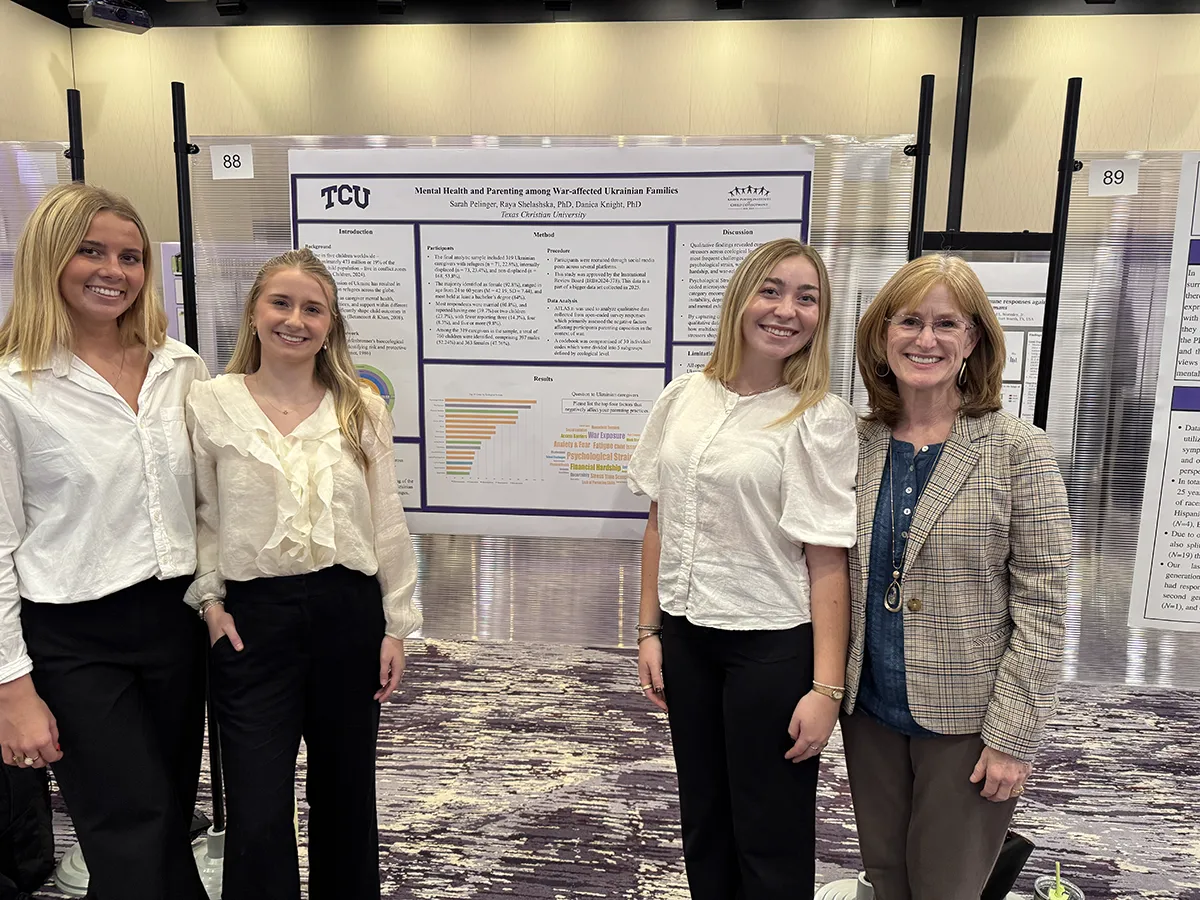
Researchers at the Karyn Purvis Institute of Child Development at TCU conduct research that deepens understanding of child and family well-being, evaluate the effectiveness and impact of TBRI® and trauma-informed care, and translate findings into actionable insights for systems of care and practice.
Research Highlights
Our research spans the development, testing, and implementation of TBRI® programs across diverse settings and systems of care. Highlights of our previous and ongoing projects include:
Evaluation of TBRI® Trainings and Programs
TBRI® Caregiver Training
(Purvis et al., 2015)
The Hope Connection® 2.0 Camp
(Hunsley et al., 2025)
TBRI® Practitioner Training
(manuscript in preparation)
TBRI® 101
(Razuri et al., 2016)
These studies provide evidence for the effectiveness of TBRI® programs in strengthening caregiver capacity and supporting child well‑being.


TBRI® as a Model of Care
Our research also examines TBRI® as a comprehensive model of care across systems of practice, including:
Strengthening family‑based care
(Howard et al., 2014; Hunsley et al., 2022)
Supporting the developmental needs of children and youth in out‑of‑home care
(Purvis et al., 2012; Purvis et al., 2014)
TBRI® Across Service Systems
We have examined the implementation of TBRI® as a model of care across systems, including:
Child welfare
(Crawley et al., 2021)
Juvenile justice
(Yang et al., 2024; Knight et al., 2021)
Education
(Parris et al., 2014)
Our work demonstrates how trauma‑informed, relational approaches can be integrated into practice to meet the complex needs of children, youth, and families.
Development and Adaptation of Emerging TBRI® Programs
We continue to study the development and adaptation of new and emerging TBRI® programs and services, including:
TBRI® for early childhood home visiting programs
(Razuri et al., 2025)
TBRI® for youth involved in the legal system and their families
(Razuri et al., 2024)
Measurement and Evaluation Tools
In addition to program evaluation, we are developing and testing evaluation tools to support professionals in:
Assessing child well‑being through a trauma‑informed lens
(Shelashska et al., 2025)
Measuring the use of trauma‑informed strategies and practices among service providers
(Shelley et al., under review)
Recent Grants
The Center for the Adaptation and Implementation of TBRI® (CAIT)
Funded by the Substance Abuse and Mental Health Services Administration (SAMHSA)
Grant Number: H79SM085131
PD/PI: KNIGHT, DANICA K
The Center for the Adaptation and Implementation of Trust-Based Relational Intervention® (CAIT) is a National Child Traumatic Stress Network-Category II Treatment & Service Adaptation Center run by the Karyn Purvis Institute of Child Development. CAIT aims to provide national expertise in the training and implementation of TBRI and to support the continuum of care in child welfare and juvenile justice systems through specialized adaptations of TBRI.
Knight, D. K., & Razuri, E. B. (2025). Center for the Adaptation and Implementation of Trust-Based Relational Intervention® (CAIT). Annual Programmatic Progress Report: Year 3.
Preventing Opioid Use among Justice-Involved Youth as they Transition to Adulthood: The Leveraging Safe Adults (LeSA) Project
Funded by the National Institutes of Health
Grant Number: 1UG3DA050250
PD/PI: KNIGHT, DANICA K
The purpose of the Leveraging Safe Adults (LeSA) Project is to examine the effectiveness of TBRI® in preventing opioid and other substance use among youth after release from secure residential facilities. The primary aim is to leverage existing relationships to more effectively support youth after returning home. The LeSA Project is part of the National Institutes of Health HEAL Initiative.
Knight, D. K., Yang, Y., Joseph, E. D., Tinius, E., Young, S., Shelley, L., Cross, D. R., & Knight, K. (2021). Preventing opioid use among justice-involved youth as they transition to adulthood: Leveraging safe adults (LeSA). BMC Public Health, 21:2133. https://doi.org/10.1186/s12889-021-12127-3
EVIDENCE-BASED TBRI® PROGRAMS AND SERVICES
See how TBRI® is rated by evidence-based clearinghouses
Learn more
PUBLICATIONS
Explore the KPICD’s published research
Learn more